

The High-Margin Niche: How to Identify Restaurant Customers and Use Million-dollar Accounting Best Practices.
When a general accounting firm gets a new restaurant client, it usually feels like a trip to the dentist; you're really not looking forward to it but know you're going to have to deal with it sometime. Like the stress of doing your taxes, there is a lot of pressure involved with managing a restaurant, because it has constantly changing and high-speed events happening at once (POS receipts, prices of ingredients changing on a daily basis, delivery services having fluctuating fees for each item sold through each of their channels, the number of tips being pooled together, and the high rate of employee turnover). Due to the stress and lack of profit margin that is associated with restaurants, many accounting firms have taken steps to stay away from them (low-profit margin; high-stress).
Your competitive edge comes from your ability to avoid common problems. Since restaurant owners need help with their operational complexity, they will look for consultants who have expertise at protecting their profit margins. Margin in the restaurant business is extremely important in the United States, where the hospitality industry has very low profit margins (between 3-7%). A specialized accounting firm that can help a company increase its net margin from four percent to nine percent isn't simply an accountant; it is an essential partner for growth and success.
This article provides a detailed overview of ways to position your accounting firm well to attract and retain profitable clients in the restaurant industry, as well as show you how to develop the necessary operational processes to efficiently manage your clients, and how to build an advisory revenue stream by helping your clients increase their profitability through better use of their financial information.
Section 1: Go-To-Market Strategy - Targeting Restaurant Clients
To implement the best practices, you will first need to secure client contracts. Restaurant operators are usually very cynical about working with traditional accountants. Most of them have had experiences with generalist accountants who have not demonstrated an understanding of the difference between food cost and paper cost or who provided a profit & loss (P&L) report that was received three weeks after the end of the month, making the data almost worthless.
In order to separate yourself from the clutter, your sales and marketing effort must demonstrate institutional knowledge from the minute you start working with them.
Speak in Their Terms
If your sales presentation is based on generic accounting terms such as "optimizing accounts payable" or "performing regular bank reconciliations," you will lose the audience. Restaurant owners are focused on operating metrics so your sales and marketing materials, as well as your case studies and initial meetings, should primarily utilize industry-specific terms.
- Prime Cost refers to the total cost of goods sold plus the total labor. This is the primary metric for success in a restaurant.
- Cover and Headcount show the actual number of guests served in a given shift or time period.
- RevPASH is the revenue produced per hour that an available seat is filled (critical for full service operations).
- Relating to the BOH (back-of-house or kitchen) and FOH (front-of-house or service/hospitality) analogy.
- Comps and Voids are the promotional discounts, manager meals, and operational errors that have been recorded through the POS system.
Solve Their Three Most Painful Problems Immediately
When prospecting, don't sell full-service bookkeeping out of the gate. Sell the immediate resolution of their three biggest headaches:
- The Black Box of Third-Party Delivery: Most operators know they are losing money to platforms like DoorDash and UberEats, but they don't know exactly how much due to messy payouts that net out commissions, customer refunds, and advertising fees. Position your firm as the team that can decouple this data.
- Inventory Dread: Restaurant managers hate counting inventory. Show them how your firm utilizes automated platforms to turn inventory data into a weekly food-cost tracking engine without requiring hours of spreadsheet manipulation.
- The Payroll Nightmare: Managing tipped employees, shift differentials, and complex labor compliance scares operators. Emphasize your firm's deep integration with modern hospitality payroll systems.
Section 2 - Structural Best Practices: Four Elements of 4-4-5 Accounting Calendar
The most frequent error made by any accounting practice that serves a restaurant customer is to operate on a traditional monthly calendar. When comparing 31 days in May to 30 days in June, statistical distortion will occur and operational analysis will be impossible.
The Issues with the Gregorian Calendar
Let’s think about a high traffic Sports bar as an example. The majority of the sales that are being generated are coming from Friday, Saturday, and Sunday. March ends on a Sunday, so it contains 5 full weekends. April only contains 4. When comparing the two months using a conventional month over month comparison, you will see a dramatic decline in revenue for April.
The owner of the restaurant will see this decline in sales and assume the business is declining. In reality, the decline is nothing more than a structural piece of the Gregorian calendar. In a similar way, payroll costs will also vary significantly on an "apparent" basis depending on whether the month contains 4 weeks or 5 weeks worth of pay periods.
The 4-4-5 Cycle
To accurately capture information for your business, you need to migrate all restaurant customers into a 4-4-5 accounting calendar or a 13-period accounting calendar that has 13 4-week periods.
In an accounting year, a 4-4-5 cycle divides up the fiscal year into 4 quarters, each consisting of three periods in the following format: two 4-week periods and one 5-week period. Each period becomes a defined period ending on the same day of the week, such as Sunday evening.
Operational Benefits
- Equal Distribution of Weekends: Each 4-week period will contain four Fridays, four Saturdays, and four Sundays; and each 5-week period will contain five Fridays, five Saturdays and five Sundays. This enables operational benchmarks to be developed that are very accurate.
- Consistent Number of Operating Days: Each of the periods will end on the same day of the week, thereby allowing for consistency in the natural operating cycle of a restaurant; for most restaurants, they will be closed or slow on Mondays.
- Perfect match between payroll and expenses. If the restaurant pays its employees on a weekly or bi-weekly basis, payroll expenses line up exactly with the end of the period. You will no longer have complex mid-week payroll accruals to accurately measure your restaurant's labor cost.
Section 3: Operational Frameworks - Tracking Prime Cost in Real-time
Providing a restaurateur with a historical P&L statement on 15 of the following month seems like an operational autopsy. When chefs over-order fresh seafood, or do not adjust their scheduling for unexpected drops in customers' traffic three weeks ago, the capital has left, and the damage is done.
To justify premium consulting fees, your firm will need to have a weekly rolling cadence type of tracking system for Prime Costs. Prime Costs are calculated by adding together COGS (Cost of Goods Sold) and Total Labor Cost, directly.
For any restaurant to continue staying in business long-term, its Prime Costs should be between 55%-65% of total revenue and above 70% of total revenue indicates a business in danger of closing & below 50% are operational anomalies that indicate either a compromising of quality or an understaffing issue.
Analyzing the Prime Cost Matrix
Accurate weekly monitoring of your company's operations requires your client to have an extremely organized chart of accounts.
- Food Cost - The total cost of food typically consists of all of the products purchased (Meat, Seafood, Produce, Dry Goods & Dairy). Depending on the type of business, food cost typically falls between 28% and 32% of total sales.
- Beverage Cost - Beverage Cost includes all Pouring costs (Draft Beer, Bottled beer, Wine, and Spirits). Because of the high gross margins associated with selling beverages; beverage cost typically falls within a range of 18% to 24% of beverage sales.
- Papers & Disposables - This category accounts for the paper products used in to-go packaging, including take-out containers and custom bags. This category typically makes up 2% to 4% of total sales; fast-casual businesses will typically hit the higher end of the range.
- Front of House Wages - Hourly Service Employees such as Servers, Bartenders, Hosts and Busboys, will typically fall within a range of 10% to 14% of total sales.
- Back of House Wages - Kitchen employees such as Line Cooks, Prep Cooks and Dishwashers, will typically fall within a range of 12% to 16% of total sales.
- Management - Management includes Salaried General Manager, Sous-Chef and Kitchen manager. Management will typically fall within a range of 6% to 8% of total sales.
- Labor Burden - Labor Burden includes all payroll related taxation (e.g. Payroll Taxes, Workers Comp, Health Care and Bonuses) which typically adds an additional 4% to 6% of total sales.
How to Create a Weekly Flash Report
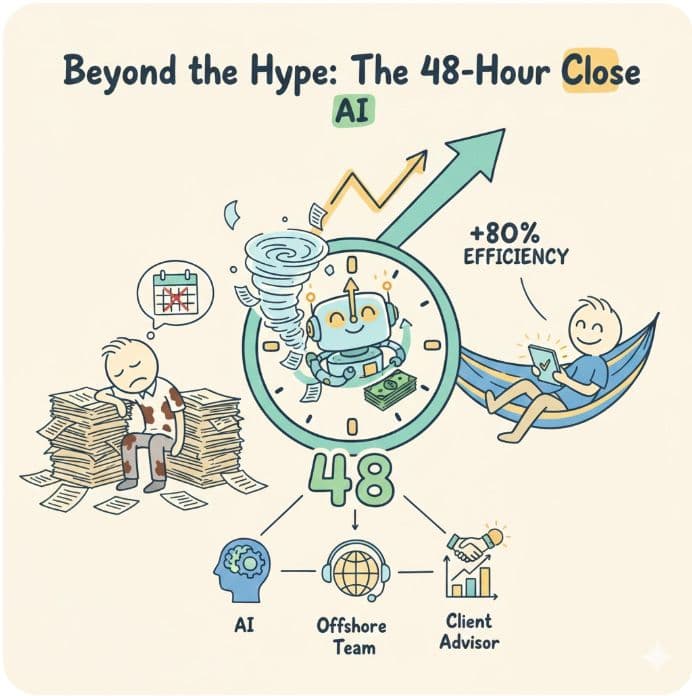
Your company should create a single-page operational dashboard by providing a report each Tuesday that summarizes performance for the prior week.
Your company cannot count on performing a true physical inventory every week, meaning you will have to use historical baseline inventory data along with actual weekly purchases to estimate COGS (Cost of Goods Sold) for each week. After you have accounted for COGS using the equation above, you will then provide the operator with the Exact Prime Cost percentage that they can use to adjust their schedules and order supplies before the upcoming weekend.
Section 4: Technology Implementation - Automating the Three-Way Match of Invoices.
Using staff hours to manually input vendor invoices into a company's accounting system is an ineffective use of time, and it's also highly probable that there will be mistakes due to human error. A busy restaurant will have multiple vendor invoices to enter each week (usually between 30 and 50), as well as receive vendor invoices each week for products purchased (food distributors, local farms, beverage companies, linens). Additionally, the prices of ingredients can change frequently.
By implementing a modern automation hospitality technology stack, the firm will eliminate the need for manual data entry. This layer is placed directly between places of operation (POS: Toast/Lightspeed/Clover or scheduling programs: 7Shifts/Homebase) and the final general ledger (QuickBooks Online/Xero). By using products such as Margin Edge, Restaurant365, and Plate IQ, the client can be put on an automated invoice payment workflow.
- The Three-Part Matching Process Digital Capture: The kitchen manager or receiving clerk will take a photo of the delivery invoice with a tablet/smartphone just as the truck pulls away from the delivery site.
- AI Extraction: The system will utilize software to extract the individual line-item ingredient level and pricing (the price per each pound of product like chicken breasts, yellow onions or frying oil).
- Automated Match: The system will utilize three documents and perform a match; initial Purchase Order, signed Delivery Receipt (includes any shortened items and/or rejected product cases) and final Supplier Invoice.
If a vendor has quietly increased the price of a core ingredient by more than the specified limit that has been predefined, (for example, the price of dairy products has increased by over 10%) as captured via the system, the system will notify your company of the variance within the pricing structure. You then have an opportunity to notify the chef to make changes to pricing menus and/or source a new supplier prior to the erosion of your margin impacting your bottom line.
Section 5 - Mapping & Knowing the Omni-Channel Ecosystem of Revenue Generation
The time has passed for recording everything simply on cash sales and credit card sales. Food/beverage businesses now operate as omni-channel businesses with many different revenue streams all running at the same time, resulting in different types of costs.
Recording all incoming deposits into one sales account will lose you many valuable insights regarding your operations. Set up clear, distinct mapping from your POS system to your general ledger so that these various sales channels are well defined.
Separating the Challenges of Third-Party Delivery
Companies such as DoorDash, UberEats, and Grubhub pose significant accounting hurdles because they do not directly deposit gross sales into the restaurant's bank account; they instead do so in the amount of net funds available for transfer following the deduction of their commissions, marketing costs, customer adjustment and taxes from total gross sales.
When your accountant simply performs bank deposit reconciliations by treating these deposits as revenue only, two primary problems are created: One, gross revenue is understated which will impact the accuracy of the tax return; two, total operating expenses are hidden. The platform's commission (which can range from 15%-30% of gross sales) is not recorded as an expense on your profit-and-loss statement (P&L), thereby concealing an important expense related to restaurant operations.
It is important for your firm to develop your accounting practices in order to ensure that daily or weekly payments from third-party providers are broken out into journal entries to reflect the correct nature of the transaction. Example: You will debit the bank account (for net amount received), debit a Delivery Commission Expense (for platform fees), debit a Platform Marketing Expense (for promotions) and credit Gross Sales for the total amount of food sold through the third-party delivery platform. When it comes to separating your numbers to help your client understand his finances, it can help to provide an explicit example in terms of how to relate the two components of this type of reporting. For instance, you might say, "Your delivery channel produced $10,000 this period but cost you $2,500 in platform fees. Perhaps we should review your online menu pricing and see if we can factor in the cost that was incurred while producing your online sales."
Accounting for Gift Cards and Unclaimed Property
Gift cards create an immediate cash inflow, but no immediate revenue. Gift cards are to be recorded on the balance sheet directly to a Gift Card Liability account until redeemed for food & beverage.
In addition, your firm is responsible for helping clients keep track of breakage, which refers to previously purchased gift cards that are never used. Depending on the laws of each state, any unused balance on gift cards could eventually be considered unclaimed property or escheatment and prohibit you from redeeming the gift card (depending on your record-keeping practices).
Section 6: Labor optimization and adherence to tip compliance laws
Labor is typically a restaurant's most significant variable expense and greatest liability for compliance with regulations. Restaurants are subject to frequent Dole audits, and minor errors in tip reporting can result in significant penalties or back taxes.
Cross-Referencing Labor and Revenue
By providing your clients with the tools they need to manage their staffing schedules efficiently, you can add tremendous value to your role as an advisor. When you combine insight from platforms such as 7Shifts and Homebase with the financial reporting systems of your clients, you can look at labor hours and relate that information to actual sales volume in real-time.
For example, if you find from POS system records that there is a predictable drop-off in customer transactions from the hours of 2:00 pm to 4:30 pm during the week, but the labor scheduling indicates multiple line cooks and/or servers clocked in at full pay rates during the same time period, then this discrepancy will jump out at the client as an opportunity for operational efficiencies. You are then able to advise the management team on ways to change their scheduling practices by implementing staggered shifts and/or cutting their labor levels earlier in order to preserve cash flows.
The Complexities of Tipped Wages and Pools in the Restaurant Industry
For restaurateurs and owners who employ tipped staff, managing payroll requires careful attention to detail in order to ensure compliance with all pertinent laws. Three foundational compliance issues must be considered by your firm when determining if the operational processes in place can effectively support and accurately calculate the desired payroll treatment:
- FICA Tip Credit (IRC Section 45B): The FICA Tip Credit is a valuable tax credit available to US restaurant owners. By law, restaurateurs are obligated to pay 7.65% FICA taxes on all employee-reported tips. As stated in IRC Section 45B, employers are allowed to claim a federal tax credit against their FICA liability associated with tip revenues that exceed the applicable minimum wage. Your firm's ability to obtain explicit detail regarding this statistic benefits your client by reducing their tax liability and saving them thousands of dollars in taxes each year.
- Tips vs Service Charges: The IRS has established a rigid distinction between tips and service charges. A tip is a voluntary transfer of money or property from a patron to an employee, and as such is not governed by any regulation. A tip may be any amount and receive the full discretion of the patron/guest, including no tip at all. On the other hand, a service charge is a mandatory charge for service that is required by the restaurant owner and collected from the patron/guest as revenue to the restaurant. Examples of service charges include the automatic 18% gratuity that restaurants often impose on parties of 6 or more. Service charges are considered regular revenue for corporate income tax purposes as well as when distributed as wages to employees on Form W-2 (which impacts the calculation of overtime).
- Tip Pooling Compliance: When a restaurant maintains a communal tip pool into which all of the employees contribute their tip income, this pooling typically occurs behind the scenes. Therefore, it can be difficult for both employers and employees to comply with IRS requirements for proper handling of tip income.
As part of the reporting process to track compliance with any applicable restaurant laws, your company must confirm whether or not your restaurant has properly excluded owners/management personnel from participating in your tip pool. Managers, supervisors, and owners may not be allowed to participate in any aggregated tip pool; therefore, it is essential that they do not share (i.e. pool) tips with non-managerial employees. Violating these regulations could result in your restaurant losing its minimum wage tip credit, and thus subject to significant potential legal liability.
Section 7 - The final plan: A specialized advisory package structure
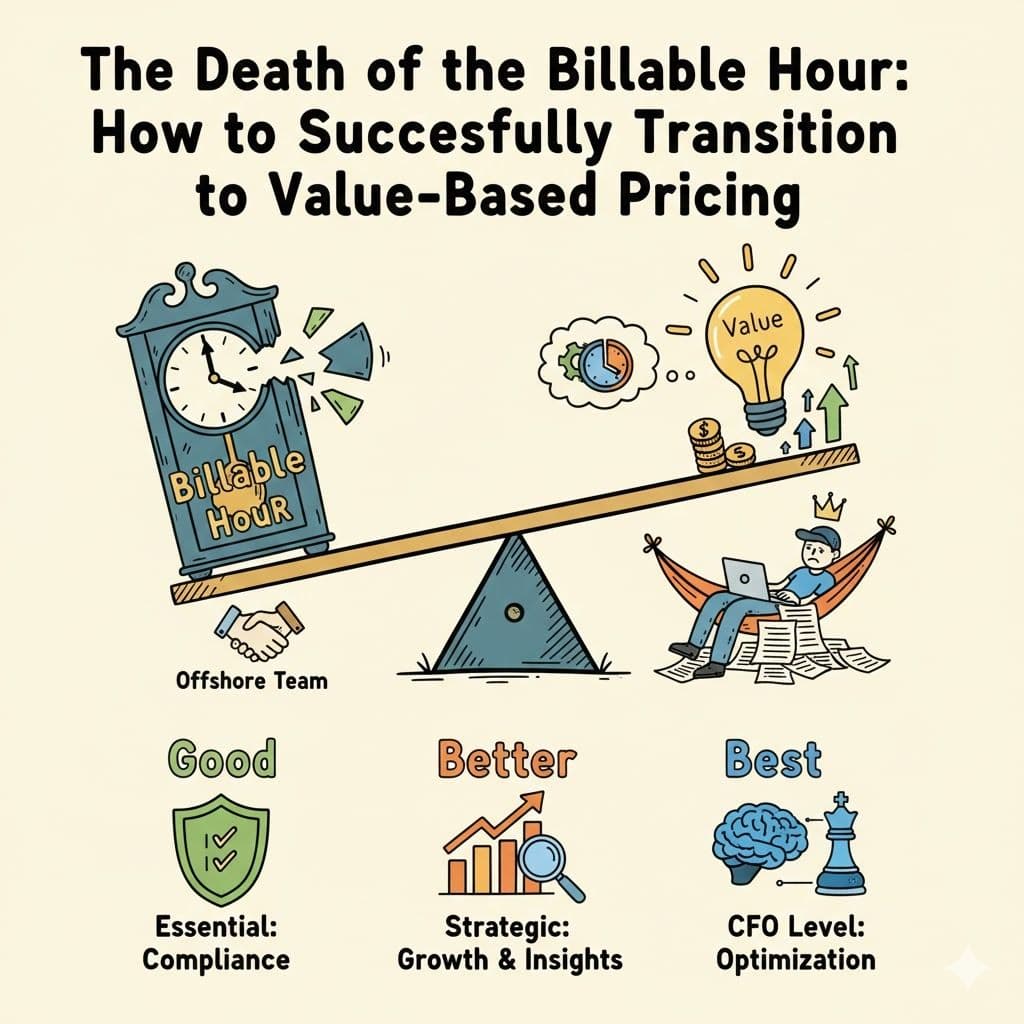
When you’ve got those workflows mastered – stop billing hourly. Restaurants have flat and predictable cash flows and want a consistent monthly operating investment. So, develop your service offerings into high margin packages, grouped by your specialized expertise.
3 packages should be defined:
- Foundational ($750-$1,200/month) – Includes core 4-4-5 bookkeeping, daily POS sales sync, automated A/P pipeline Mgmt. and monthly tax compliance.
- Accelerate ($1,500-$2,500/month) – Same as foundational but adds weekly flash reporting, prime costs tracked weekly, labor schedules audited and operational benchmarks.
- Strategic ($3,500+/month) – All the items in core package, plus virtual CFO strategy sessions once a month, operational benchmarking from multi-unit locations and creating annual budgets or forecasting models.
By utilizing a clear process based framework when working with restaurants, you can transition your firm from being a line item on a restaurant's profit and loss statement to an integral part of their operational management team. You then provide the clarity operators need to scale up with confidence, while you solidify your own high margin, predictable niche for advisory service.