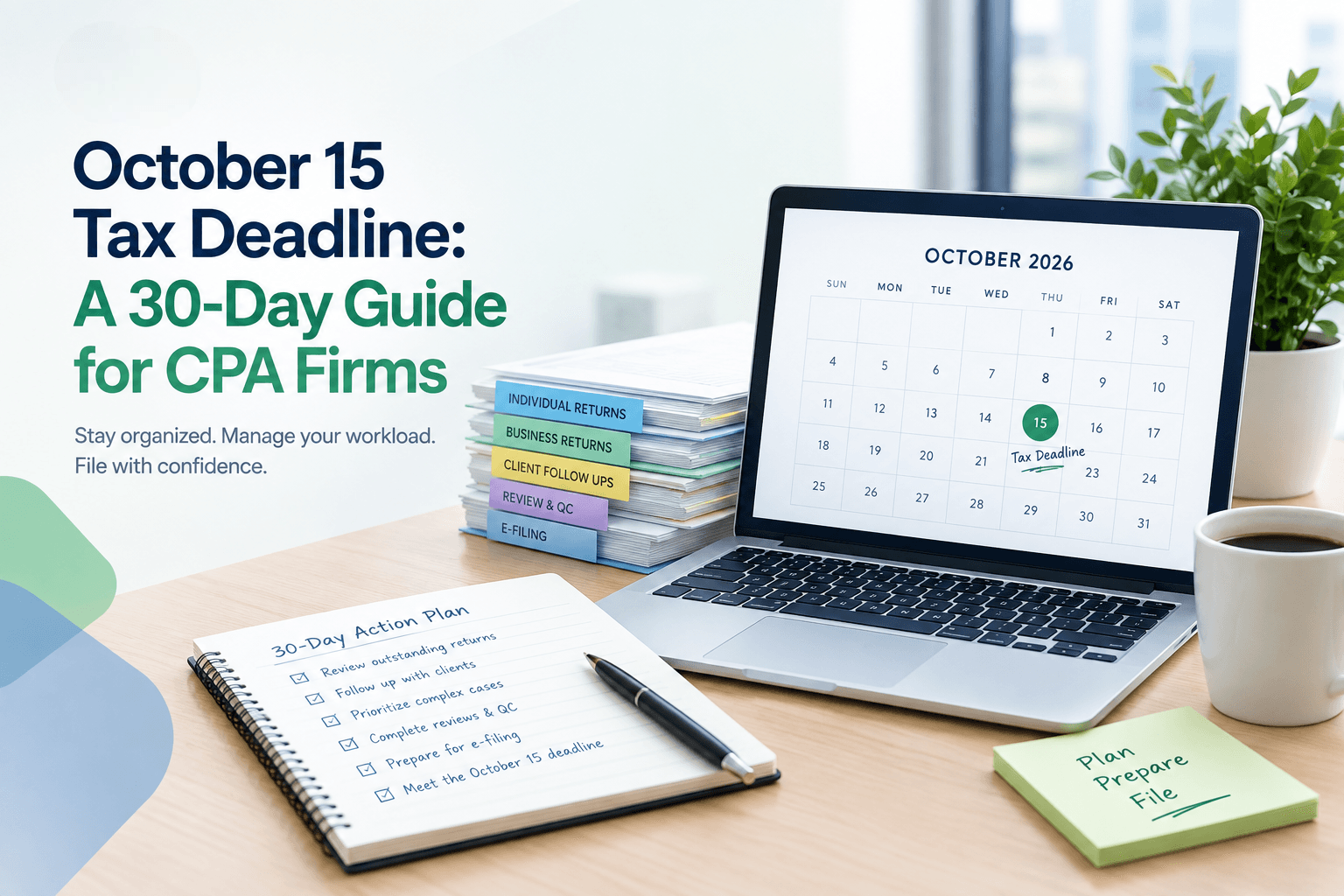


Most firms - including some accounting departments - view financial planning as an event that takes place in January. With the start of a New Year, the aim is to put together a fresh set of numbers to create fresh goals. However, by the time proper planning actually takes place, two of the most important keys to achieving a successful 2027 have usually closed.
October is a quiet but significant time in the accounting world. Not simply the "pre-year-end"; but the definitive moment when a company or its accountants can not only influence 2026 but also plan for 2027 at the same time.
Here are the many things October allows for, including some common mistakes that even seasoned finance professionals make after sending in their paperwork on October 15.
Why October, Not January
As early as January, some key financial planning opportunities have been lost:
• The elections necessary for the tax system to be set up properly needed earlier decisions to be made and filed regarding entities;
• The retirement plan processes are not valid unless there is an existing plan in place;
• There is no further chance to mitigate tax underpayment issues once Q4 begins;
• A whole quarter has been skipped and lots of accurate forecasts have gone to waste.
Any business that begins strategic planning in October is not early; they are simply right on time. In contrast, those businesses that wait until January are already reacting to a situation that has developed without them.
For CPAs and accounting firms, the absence of proper timing is exactly the moment when, for their customers, they can either look like compliance providers or true advisors.
What Many Accounting Teams Overlook Once October 15 Passes?
October 15 is, for the majority of companies, the end of the road - the extended filing deadline allows companies to put the work behind them and concentrate on recruitment and any other tasks that fell behind during the busy time. But the period of six to eight weeks right after October 15 is the ideal time to carry out the most valuable planning conversations.
With the quarter 3 data available on the 15th of October, it makes no sense to base quarter 4 estimated tax figure calculations on previous year figures or rough guesses. With nine-month data available, it will be possible to calculate final figures with such precision that there will be no underpaid tax or unnecessary overpayments, freezing amounts that the client cannot successfully use before the following April 15.
A proper S-corp election window is closing much faster than the clients expect. While a delayed request for S-corp election filing under Rev. Proc. 2013-30 could potentially be made for the current financial year, creating a solid documentation and a narrative that justifies why a filing was delayed in the first place takes time and should be present. The response of “should I convert” in February will often mean that the opportunity for that tax year is gone.
The issue involving multi-jurisdictional exposure may not become apparent until the end of the year, though significant amounts of exposure may have accrued by that point. For example, a business that exceeded the economic nexus threshold during the second quarter may only become aware of that fact during its year-end sales tax filing - by which time it is too late to prevent the repercussions that registration, back-filing, and managing penalties create. A check during the third quarter could catch the problem while it is still manageable.
The processes of depreciation and Section 179 affect the financing decisions of next year. For instance, when a client contemplates borrowing or arranging a line of credit in the first quarter of 2027, they might derive greater benefits from a different depreciation technique than simply accelerating depreciation to get tax deductions for 2026. Lenders analyse past financial statements, and excessive depreciation could sometimes hurt the very chances of receiving any approvals a few months later.
All these things are quite banal. They are just easy to overlook when people are so busy both preparing for the end of the year and dealing with preparations for the next tax season.
The Real Bottleneck Isn't Knowledge - It's Bandwidth
Most CPA companies are aware of the information given above. The reason is rarely a lack of knowledge; rather, it is a lack of time.
Between October and December, the firms are under pressure to complete filings and also attract clients, as well as manage existing clients’ payrolls and compliance deadlines; they are also supposed to hold discussions about their strategies for 2027, which means that something has to give. Typically, something goes wrong, but in most cases, it is their advisory activities that suffer because they have no strict deadlines.
Here is why outsourcing accounting work solves the issue. Instead of eliminating judgment, it provides firms with the chance to free up resources to engage in the discussions while the opportunity still exists.
A Practical October-to-December Planning Framework
For companies that want to put this into action with customers (or businesses that operate it in-house), a practical process should include the following steps:
- Gather figures from the last nine months to create a real 2026 taxation forecast – not last year's profits projected into the future.
- Conduct the estimated tax safe harbor calculation prior to the deadline for Q4 payments, rather than after.
- Compare the business structure and the compensation system with how the company stands today, as opposed to how it was at formation.
- Ensure that all multi-state sales and use tax concerns have been examined with regard to current state-specific revenue.
- Prepare the budget and cash flow plan for 2027 based on historical data.
Where Xconcile Fits into This Window
Xconcile works alongside CPA firms and growing businesses to cover exactly the capacity gap that makes October planning hard to execute at scale. A few ways this connects directly to the framework above:
Outsourced Tax Preparation frees up in-house preparers from routine return work so senior staff have room for the projection and planning conversations that actually retain clients.
Outsourced Virtual CFO & FP&A support can build the 2027 budget, cash flow forecast, and scenario models directly - work that is easy to recommend but hard to staff internally during Q4.
Multi-State Sales & Use Tax Compliance support helps catch nexus exposure before it compounds into a bigger year-end problem.
Outsourced Accounting & Bookkeeping keeps the underlying books current enough that a nine-month actuals pull is accurate on the first try, not after a clean up project.
Outsourced Payroll & Compliance Services takes routine payroll tax and compliance checks off the plate so they are not competing with planning work for the same hours.
If audit season overlaps with year-end for your firm as well, Audit Outsourcing Services covers that capacity separately, so planning work is not the first thing sacrificed when audit deadlines tighten.
The Takeaway
Organizations and their advisors who will step into January 2027 ready and prepared are not the ones with the most detailed and complicated Excel files. Instead, they are the ones who began thinking about 2027 back in October when discussions about entity selection, safe harbor calculations, and tax strategies to promote financing were still going on.
The question this month ought not to be whether it is important to plan for 2027 but rather whether the team can handle this task within the required time frame.
FAQs
1. Why is October better than January for starting 2027 financial planning?
By October, nine months of real financial data is available, and there is still enough time before year-end to act on entity elections, estimated tax adjustments, and depreciation decisions - all of which have hard deadlines that January cannot undo.
2. What financial planning tasks are easy to miss in Q4?
Estimated tax safe harbor recalculations, S-corp or entity election windows, multi-state nexus exposure, and depreciation strategies that interact with next year's financing plans are commonly deprioritized once extended filing deadlines pass.
3. How can outsourced accounting support help CPA firms deliver year-end planning?
Outsourced bookkeeping, tax preparation, payroll, and virtual CFO support can absorb routine workload during Q4, freeing internal teams to focus on higher-value planning conversations with clients before deadlines close.
4. Is proactive 2027 planning only relevant for large businesses?
No. Even small and mid-sized businesses benefit from nine-month actuals-based projection, since entity structure, tax timing, and cash flow decisions compound in impact the earlier they are made.