

The prolonged individual tax filing deadline is set for October 15, about ten days from now. Numerous public accounting firms are still completing tax returns they had assumed to be fully completed in the month of April.
Once called tax season by the profession itself, many firms think of tax season in just that traditional sense. It is actually a long chain of series of events that don’t finally culminate. There are reasons for this reality to occur.
Tax Season Is Now Three Seasons
Look at the compliance calendar:
- January to March: W-2 and 1099-NEC deadlines on January 31, then partnership and S-corporation returns in mid-March.
- April: Individual and C-corporation returns, plus the extension filings that push work into the fall.
- September and October: Extended entity and individual deadlines, which land just as year-end planning begins.
The extension applies only to the time to file but not to the time to pay. The clients who did not make their estimated payments accurately may incur penalties and interest after they file. It is mainly the books that indicate what they should have paid. If the books are late or unreliable, the estimates are just guesses, and the stress returns every deadline.
The Hidden Bottleneck: "Bookkeeping Debt"
Companies often think that tax season is a slow time due to the lack of enough preparers, but in many cases, the real problem is the state of the client's books. What ends up happening is that a client sends a whole year’s worth of data, which include unbalanced bank accounts, incorrect classification of transactions and private expenses intermixed with the business. This means the preparer needs to do the following:
- Balance the accounts,
- Reclassify transactions,
- Request receipts from the client,
- Establish the original trial balance,
- And finally start the actual tax return preparation.
All of this is considered bookkeeping but charged at top dollar. It also happens again and again, because a dirty client stays dirty until his problems have been resolved.
Outsourced bookkeeping moves that cleanup out of the busy window. A dedicated team keeps the ledgers reconciled all year, so the books arrive ready for review, not for repair. Xconcile's outsourced accounting and bookkeeping service is built around this idea, with US GAAP-trained professionals acting as an extension of your team. If bank feeds, reconciliations, and journal entries stay current, preparers can start with a usable trial balance.
Sequencing Matters More Than Headcount
Bringing additional staff on board late does not usually help solve a capacity issue. Bringing a new employee up to speed in the month of February uses up the time that you have been trying to save. Companies that manage to handle this issue have altered their work rather than changing staffing levels.
The best method appears to be closing clients' books on a monthly or quarterly basis. When a firm has a fixed schedule of closing clients' books every month, the time spent in January and February collecting data is virtually eliminated because everything is settled already. A CPA firm from Florida has described the process on Xconcile's website. Their partnership began with outsourcing bookkeeping and later evolved into monthly and quarterly closing of clients' books, which the firm believes to be a must-have service.
If you wish to be ahead of your competitors, you may want to send clients Xconcile's Year-End Bookkeeping Checklist, which presents a useful tool for talking to clients. The checklist consists of 12 tasks to be completed before 2027, and sending it to clients will help get the necessary information beforehand.
Time Zones Can Work in Your Favor
Most individuals seem to consider the time difference with a remote crew as a barrier in communication. Should there be a type of job related to deadlines, this difference can be perceived as a benefit.
Let's say your employees leave their workplace at 6 p.m. bringing with them the number of reconciliations to be done. While your team has gone home, the offshore crew can complete the work. As a result, your team will be able to use the ready files when entering their office the next day. If this happens on a regular basis for a couple of weeks, this could definitely result in great amounts of time gained.
This does work best when one is able to make sure that the outsourced workers fit into your existing procedures. Otherwise, it will also be a good option to have a say in who you are going to work with.
Your Senior People Are Doing the Wrong Work
Many organizations have not yet figured out how much time their management teams dedicate to unnecessary activities that don't need to be performed by CPAs.
Every minute spent by a manager recording transactions or fixing reconciliation problems is a moment not spent on management, planning, or advisory work. These activities are precisely what companies are looking for to increase their income and get closer to their clients. Additionally, the sector has encountered a problem of a shortage of good specialists in the labor market, which has made it more difficult to replace those burnt out from hard work.
By hiring outsourced specialists to do simple tasks, companies allow their staff with special licenses to do tasks that require their own wisdom. This also creates more interesting opportunities for people who want to stay at this company. In fact, companies that are able to do such things, can find an opportunity to offer forecasting and budgeting services to their customers. If you want to know more information about the details of the outsourcing process, you should check Xconcile's services dedicated to financial management.
What Clean Books Quietly Uncover
Proper bookkeeping practices reveal challenges which might remain invisible till it is too late and expensive to deal with them.
- Sales tax obligation: On the strength of the Supreme Court's Wayfair ruling in 2018, a business can incur tax obligations in states which are not physically occupied by it based on economic activity conducted by that business. It can happen that a business selling online to clients in multiple states might have obligations that have never been discovered. However, analysis of transactions on the basis of clean transaction data can make this possible. The service from Xconcile in compliance with multiple sales taxes explicitly aims at the identification and discovery of such obligations.
- Payroll discrepancies: Payroll taxes (quarterly filings by means of Form 941 and annual filings by means of Form 940) should be reconciled to general ledger and W-2s issued. Any discrepancies between the filings make the company liable for notices and corrections during the year-end period. The service from Xconcile makes it possible to reconcile payroll correctly.
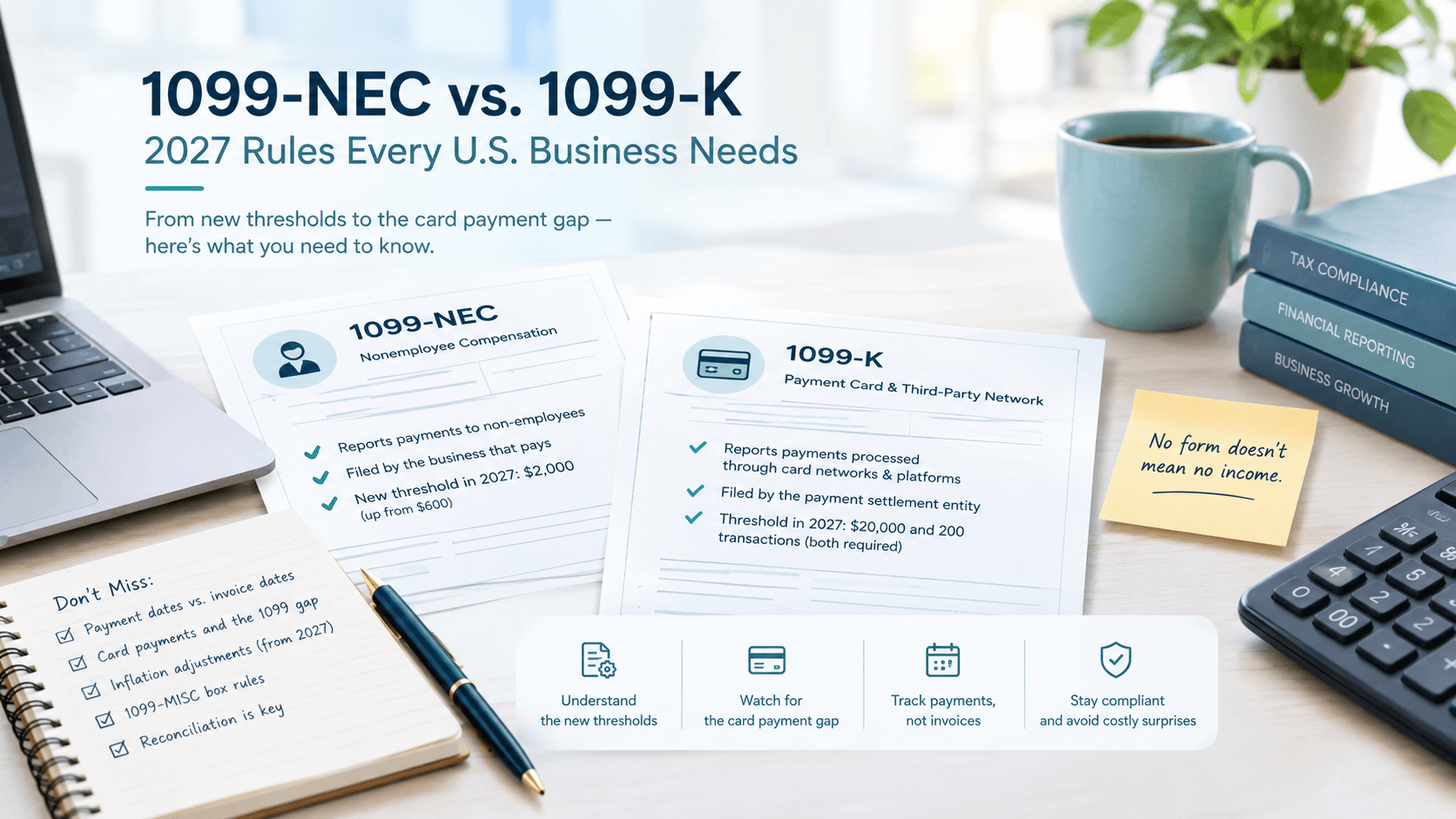
- Gaps with 1099 forms: Failure to properly track payments to vendors in the course of the year makes it difficult to manage 1099 forms.
None of these are exotic problems, but all of them become expensive in the middle of a deadline.
The Security Question You Should Ask First
Before starting any outsourcing process, companies need to remember that data protection is not an optional component of the outsourcing experience. Important considerations include:
- Written information security plan (WISP). The Internal Revenue Service requires tax professionals to have a WISP, as does the Federal Trade Commission Safeguards Rule. Ask your outsourcing provider about their procedures and whether they fit in with your WISP.
- Permission from taxpayers. Section 7216 of the Internal Revenue Code prohibits tax preparers from releasing information regarding a tax return outside of the country unless they have obtained the permission of the taxpayer. The rules are even stricter when it comes to Social Security numbers. It is important that your contracts reflect how your tax preparation is provided.
- Control of accessibility. Look for role-based access to systems, multi-factor authentication, and the ability to revoke access.
Many firms skip these questions at the start and revisit them after something goes wrong. Learn more about how the team operates on the Xconcile about page.
A Practical Plan to Get Ready
If you want your next filing season to go smoothly, there is a practical sequence of things you should do:
- Sort out your clients. Take them based on the state of their books - are they updated, outdated, or need cleaning up?
- Analyze the poorest files. Cleanup work usually takes time, so it's better to begin in advance.
- Determine the responsibility. Identify the accounts and everything about the software used.
- Make a closing calendar. Choose the period for the closing and keep track of the deadlines.
- Test on several clients. Start slowly and observe how many hours you need.
Xconcile also works with common tax platforms such as UltraTax, Drake, and ProSeries, which means bookkeeping outputs can move into your preparation workflow with little friction.
Where Outsourcing Goes Next
Bookkeeping is the most common starting point, but firms that see results usually extend the relationship once trust is built. Depending on your needs, that might include:
- Outsourced Tax Preparation, for peak-season overflow on returns.
- Audit Outsourcing Services, for assurance work that strains your team outside tax season.
Start with the area of your practice where your best people spend most of time on work that doesn't need them. That is usually the highest-value place to begin.
The Bottom Line
Tax season stress rarely comes from the returns themselves. It comes from everything that should have been done earlier: reconciliations, categorization, payroll tie-outs, and sales tax questions that only surface under pressure. Outsourced bookkeeping gives you a steady year-round process, and your people get the clean input they need.
If you're planning for the next filing season, the best time to build that foundation is before the rush. You can schedule a meeting with the Xconcile team to discuss your firm's workload, or contact them directly for a tailored plan.